
When heavy rain falls on bare, hard ground, most of it runs straight off. It rushes into drains, floods low areas, carries soil away and is gone within hours. When the same rain falls on a forest, much of it is caught, slowed down and soaked in.
This is one of the quiet powers of a forest: it helps the land hold on to water.
What happens to rain on bare land
On bare land, raindrops hit the soil directly. The surface seals over, and the water cannot sink in. It runs off, taking topsoil with it. That means floods downstream, muddy water, and dry ground soon after the rain stops.
What happens in a forest
In a forest, the rain meets several layers first:
- Leaves slow the drops and let them fall gently.
- Mulch and leaf litter cover the soil and soak up water like a blanket.
- Roots open channels in the ground so water can sink in.
- Living soil, rich in organic matter, acts like a sponge.
The water then moves slowly down into the soil and can help recharge groundwater. Wells, borewells and nearby water sources can benefit over time, though the effect depends on the local geology and on how much land is covered.
Less runoff, fewer floods
Because rain soaks in instead of rushing off, a forest can reduce runoff. This helps lower the risk of flooding and muddy water in nearby areas. It also stops topsoil from being washed away, which is a loss that is very hard to repair.
Moist soil for longer
Forest soil stays damp for longer after the rain. Shade stops the sun from drying it quickly. Mulch locks in moisture. This is why a well-prepared forest needs less watering as it matures.
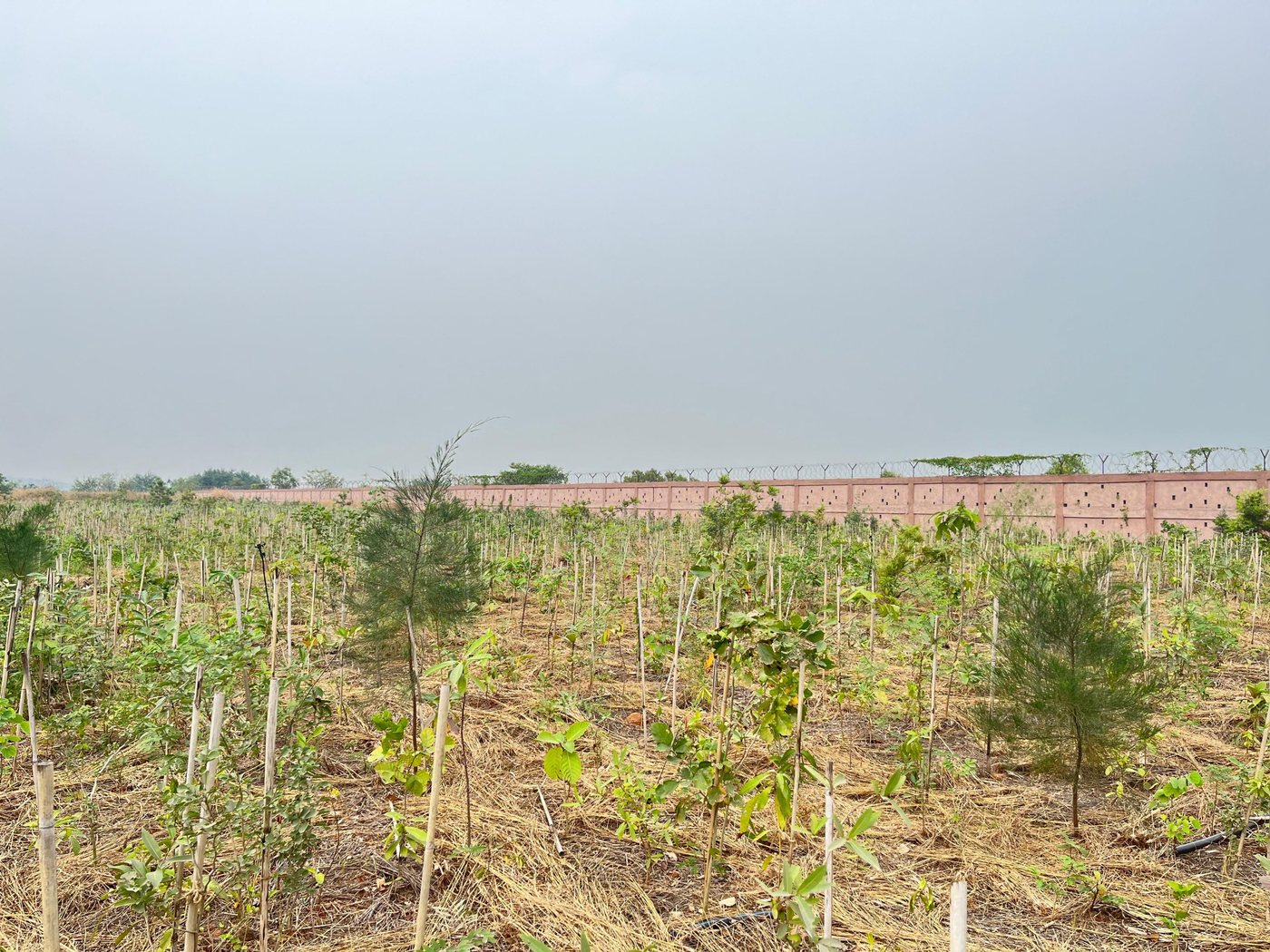
At our JNPT forest, we used mulch and drip irrigation in the first years. The mulch is the golden layer you can see between the young saplings in our site photographs. It keeps the soil cool and damp, and slowly turns into food for the soil.
Why soil preparation matters
For a forest to soak up water, the soil has to be open and alive. Compacted soil resists water. That is why we begin each Bharat Vann forest by loosening and enriching the soil with natural materials such as compost, cow dung and jeevamrut. Good soil is the first step towards water security.
Native trees and deep roots
Many native trees have deep, strong roots that help bind the soil and open pathways for water. A mix of species, with roots at different depths, makes the soil network stronger.
A forest as part of a water plan
A forest alone will not solve a water shortage. It works best together with rainwater harvesting, good farming practices and careful water use. But it is a long-lasting and low-cost part of the plan, and it keeps working without electricity or machines.
Things you can do
- Keep ground covered with mulch or plants, not bare soil.
- Plant a forest or a green belt on open land.
- Do not pave every patch of ground.
- Channel rain into soak pits or planted areas.
Frequently asked questions
Do forests really help groundwater?
Forest soil soaks up rain and releases it slowly, which can help recharge groundwater. The effect depends on local conditions.
Does a forest need a lot of water?
Young trees need regular watering for the first few years. After that, a well-prepared forest needs far less.
Why is mulch so important?
Mulch protects the soil from the sun, locks in moisture and adds food for the soil as it breaks down.
Want your land to hold more water and need less watering? Speak with Forest Creators.
Talk to Forest Creators