
Every time you eat a mango, an apple, a pumpkin or a spoon of honey, you are thanking an insect. Bees, butterflies, moths, beetles and many other small creatures carry pollen from flower to flower, and that is how many plants make fruit and seeds. This job is called pollination.
Pollinators need two things: food and a safe home. Open, bare land gives them very little of either. A forest gives them both. That is why a new forest can matter far beyond its own boundary, especially to the farms next door.
What pollinators need
A bee has simple needs. It needs flowers for nectar and pollen. It needs water. It needs a place to nest or shelter. And it needs to avoid too many chemicals and too much disturbance.
A dense native forest provides most of this on its own. Trees and shrubs flower at different times of the year. Leaf litter, dead wood and the soil itself give many insects places to live. Shade keeps the ground damp and cool.
Why a forest feeds pollinators better than bare land
Think of a farm field. When the crop is not in flower, there is almost nothing for a bee to eat. A forest is different. Because it holds many species, something is usually in bloom. If trees and shrubs flowering in different seasons are chosen on purpose, the forest becomes a food stop through the year.
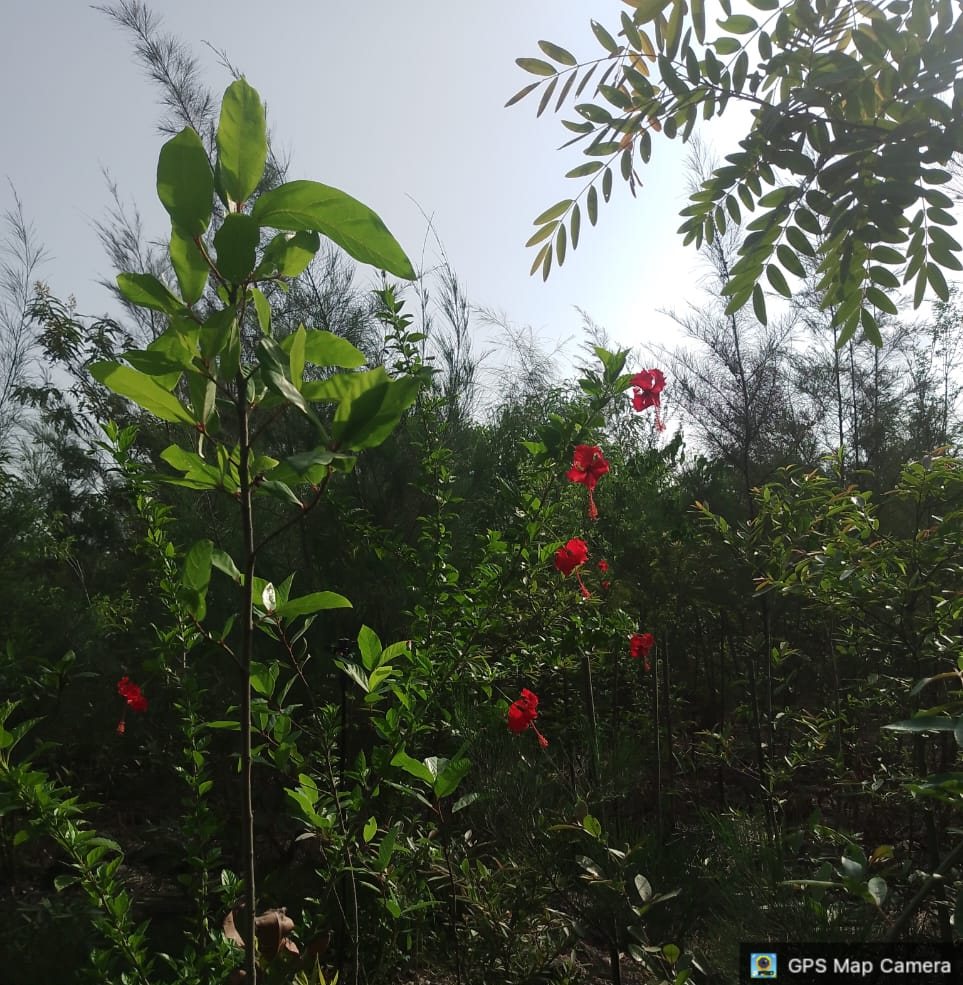
At our JNPT forest in Nhava Sheva, we have photographed hibiscus, oleander, frangipani and Pride of Barbados flowering among the young trees. Flowers like these draw in bees and butterflies. On land that was bare soil not long ago, this is a sign that life is returning.
How nearby farmers can benefit
Many food crops depend on pollinators, including fruits, vegetables, oilseeds and pulses. When more pollinators live close to a farm, more of them visit the crop. That can help the farm produce better fruit and seed.
A forest next to farmland can also help in other ways. It can act as a windbreak. It can keep the ground cooler. It can shelter the insects, birds and other animals that eat crop pests. These are quiet, steady helpers.
Pollinators and the forest help each other
The relationship goes both ways. Pollinators help the forest's trees and shrubs set seed, which keeps the forest healthy and growing. A healthy forest feeds more pollinators. Over time the whole place becomes more alive.
Native trees matter
Local insects have lived alongside local trees for a very long time. Native species tend to suit them best. That is why Miyawaki forests and Bharat Vann forests are planted mostly with native trees and shrubs, in many layers.
What you can do
- If you own land, keep a patch for a native forest or a green strip along the boundary.
- Plant a mix of species that flower at different times.
- Go easy on chemicals near flowering plants.
- Leave some leaf litter and dead wood. Insects use it.
- Keep a bowl of fresh water in a shady spot during summer.
Frequently asked questions
Do forests really help farm crops?
Forests can support pollinators and other helpful creatures that live near farms. This can help crops that rely on pollination. The effect depends on the crop, the distance and the local conditions.
How quickly do bees come to a new forest?
Pollinators usually arrive when plants begin to flower. The more kinds of plants a young forest has, the more likely something is in bloom.
Should forests be planted near farms?
Often, yes. A forest or a green strip next to farmland can give shelter, shade and food to helpful insects, as long as the species are chosen with care.
Thinking about a forest near your farm, factory or campus? Talk to Forest Creators about a native forest plan.
Talk to Forest Creators